
Does your tattoo shop need an EGLE registration? Can a small Michigan studio keep its sharps container longer than 90 days? What will a health inspector want to see?
These questions matter whether you operate a private appointment-only studio or a busy tattoo and piercing shop. The right waste setup helps protect your artists, keeps disposal records organized and prevents avoidable pickup problems.
This guide explains Michigan’s medical waste requirements and how to choose a service that fits your shop.
Does a Michigan tattoo shop need to register with EGLE?
Yes. Tattoo and piercing facilities that generate medical waste must register as medical waste producing facilities. EGLE administers Michigan’s Medical Waste Regulatory Program, and registration must be renewed every three years.
Registration is handled through Michigan’s MiEnviro Portal. It is separate from your body art facility license and your agreement with a waste collection company. EGLE registration information
Do not assume signing a waste pickup contract automatically registers your shop. Keep your registration certificate accessible and confirm that your facility information stays current.
What counts as medical waste in a tattoo or piercing shop?
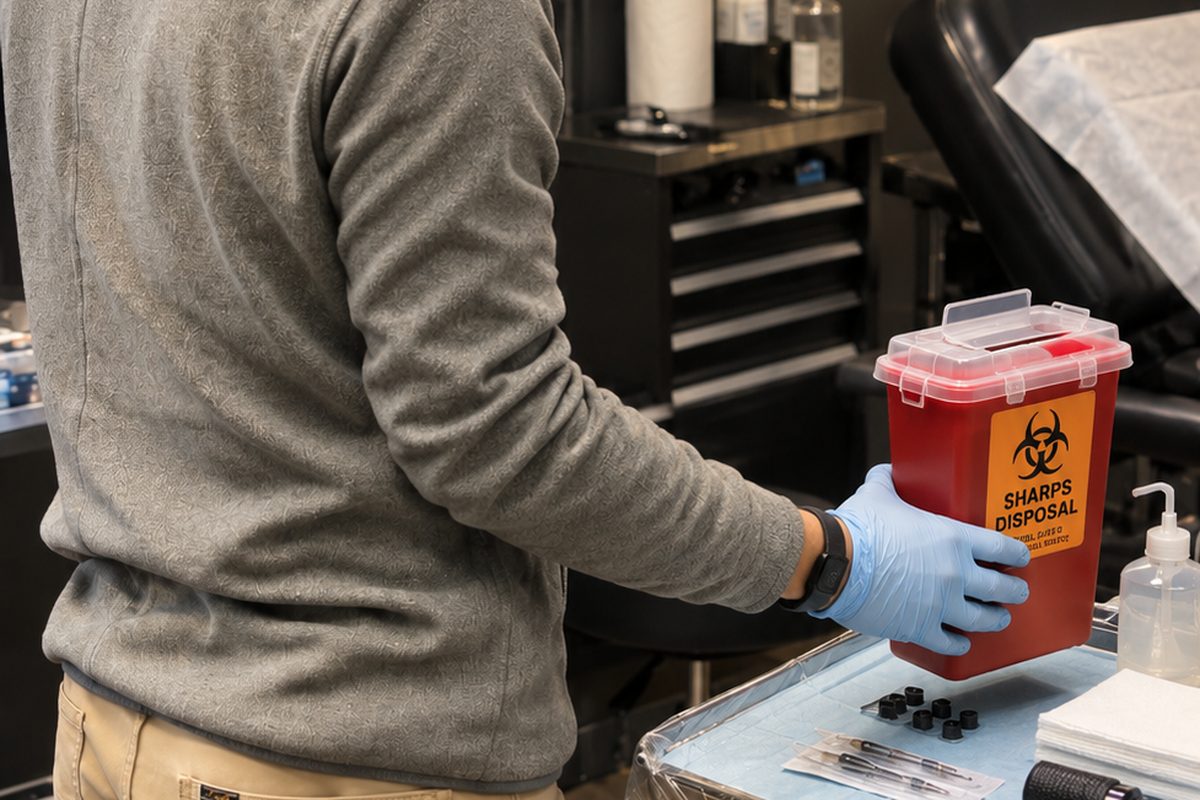
Used tattoo needles, cartridges containing needles and piercing needles need appropriate sharps containment. Other supplies require more careful sorting.
Michigan’s Medical Waste Directory includes guidance specifically for tattoo and piercing facilities. It lists tattoo ink caps and rinse cups as medical waste and distinguishes between stained and heavily contaminated materials for several other items.
For example, paper towels grossly soiled with blood or body fluids are treated differently from towels that are only stained. Classification of bandages, covers and other supplies also depends on the item and contamination. EGLE’s Medical Waste Directory
“Everything goes in a red bag” and “only needles are medical waste” are both unreliable sorting policies. Establish clear instructions for the materials your artists actually use.
How long can a Michigan tattoo shop store medical waste?
Michigan generally limits medical waste storage at the producing facility to 90 days, with a specific exception for sharps contained in a sharps container.
The sharps exception allows storage until the container reaches no more than three-quarters capacity, with an absolute limit of 18 months from the first sharp deposited. Arrange removal before either limit is exceeded, and follow an earlier manufacturer fill line if applicable. Michigan law: MCL 333.13809
Your pickup schedule should account for the applicable deadline before it arrives.
My shop barely generates sharps. Can I keep my container longer than 90 days?
Yes, if the container meets Michigan’s sharps exception. Record when the first sharp enters the container and monitor its fill level.
A partially filled container cannot remain indefinitely. The maximum is 18 months from the first sharp deposited, even if the container is still mostly empty.
This exception applies to qualifying sharps containers—not every waste stream in your shop. Ink caps, rinse cups and other regulated medical waste still need a schedule that meets their applicable storage requirements. Michigan’s sharps storage amendment
A small studio may therefore need different collection or replacement intervals for sharps and other medical waste.
What pickup frequency is recommended for tattoo shops?
For many shops, pickup about every 90 days is a practical starting point. Higher-volume studios may need more frequent collection, while qualifying Michigan sharps containers may allow longer intervals.
Your schedule should reflect:
- The types of waste your shop generates.
- How quickly containers fill.
- Applicable storage deadlines.
- Available storage space.
- Guest artists, flash events and other busy periods.
Be careful with the word “quarterly.” Calendar-quarter appointments can fall more than 90 days apart. Where a 90-day maximum applies, schedule collection within that limit rather than simply requesting four pickups per year.
A 90-day schedule is not a universal nationwide rule. Requirements vary by state and location.
Will EGLE inspect my tattoo shop?
EGLE can inspect your facility, and your local health department also plays an important oversight role. Michigan requires local health departments to inspect body art facilities before licensing and at least annually afterward. EGLE coordinates medical waste oversight with local health department partners. Michigan inspection requirements, EGLE oversight information
Be ready to demonstrate how your shop handles regulated medical waste—not just that you have a pickup company.
Keep these items organized and accessible:
- Current EGLE medical waste registration certificate.
- Your shop’s medical waste management plan.
- Medical waste vendor agreement and contact information.
- Recent shipping manifests and available treatment or disposal records.
- Staff training records.
- Recent service invoices, if requested.
Inspectors may also examine your stations and designated storage area. Your paperwork should match your actual procedures for separating waste, using containers, monitoring storage limits and preparing shipments.
Does my tattoo shop need a medical waste management plan?
Yes. Michigan medical waste generators need a site-specific medical waste management plan. Address this when establishing your registration and waste service rather than waiting for an inspection.
The plan describes the waste your shop produces and how each waste type is packaged, stored, treated and disposed of. Keep it at the facility and available for inspection. EGLE medical waste guidance
For a tattoo or piercing studio, document:
- Where sharps containers and other waste containers are located.
- How staff separate and handle each waste stream.
- Who monitors container dates, fill levels and pickup deadlines.
- Where packaged waste is stored before collection.
- The transporters and treatment or disposal facilities used, including applicable names and addresses.
- Staff responsibilities, training and protective equipment.
Superior can help you work through your plan when establishing service, including providing transporter and treatment information associated with your waste collection.
Keep the plan current when providers, waste types or handling procedures change. EGLE’s example plan specifies updates within 30 days for certain changes. EGLE example management plan
What training do tattoo shop employees need?
Training should cover both exposure prevention and the waste-handling tasks employees perform.
Bloodborne pathogens training
Employees with occupational exposure need training before their initial assignment to exposure-related tasks and at least annually afterward. Additional training is required when changes introduce new exposures. Keep completion records, including certificates supplied by your training provider. Bloodborne pathogens training requirements
Michigan’s body art guidance also addresses bloodborne pathogens compliance for people performing procedures or cleaning instruments and equipment. Michigan body art FAQ
Medical waste handling and shipping training
Employees handling medical waste need instructions consistent with your shop’s management plan. Cover waste separation, container use, storage, spill response and preparation for pickup.
Employees performing regulated shipment-preparation functions also need applicable DOT training for those responsibilities. Match training to their actual duties.
Personal protective equipment
Make appropriate PPE available and train staff to select, use, remove and dispose of it safely. Protective equipment should match the task and potential exposure. OSHA bloodborne pathogens standard
How Superior helps with training
Superior’s online training platform supports new-hire onboarding, annual refresher assignments and completion certificates. Automatic renewal assignments help keep recurring training on your calendar; staff still need to complete the assigned courses.
Annual compliance training, including bloodborne pathogens and DOT medical waste training, is included with eligible SSR plans. Training is available à la carte with Standard Scheduled Pickup.
Does hiring a waste company remove my liability?
No. Your shop remains the waste generator. Hiring a carrier or having technicians prepare a shipment does not eliminate your responsibilities.
Michigan’s medical waste program addresses management from generation through ultimate disposal. EGLE Medical Waste Regulatory Program
Superior acts as the carrier. Under our SSR program, trained technicians can help prepare and package waste. With authorization, we can also sign the manifest on your behalf. These services provide assistance while your shop retains its generator responsibilities.
What service options does Superior offer tattoo shops?
Superior offers two approaches for tattoo and piercing studios.
SSR: Service, Supply, Replace
SSR is our premium option for shops that want hands-on station servicing and waste preparation.
Depending on location and plan, it includes:
- Initial setup of participating stations and a designated waste storage area.
- Red step-operated biohazard trash cans and wall-mounted sharps container setups.
- Direct servicing of participating stations.
- Biohazard bag replacement.
- Sharps container replacement within the plan’s included quantity or allowance.
- Waste preparation and packaging in a DOT transport box.
- Authorized manifest signing on your behalf.
- Annual staff compliance training.
- Glove dispensers and hand sanitizer stations, if requested.
SSR availability, equipment and included supplies vary by location and plan.
Standard Scheduled Pickup
Our lower-cost option provides DOT packaging materials and scheduled collection. Your team separates, prepares and packages the waste before our driver arrives.
Sharps containers are available separately on request. OSHA and other compliance training are available à la carte.
Both options include initial setup and a welcome packet with medical waste posters and biohazard storage stickers.
Compare Superior’s tattoo shop waste disposal options.
Three Common Tattoo Shop Waste Pickup Problems—and How to Avoid Them
Shop access, payment arrangements and waste preparation can all affect whether service goes smoothly.
1. Shop hours and route sequencing
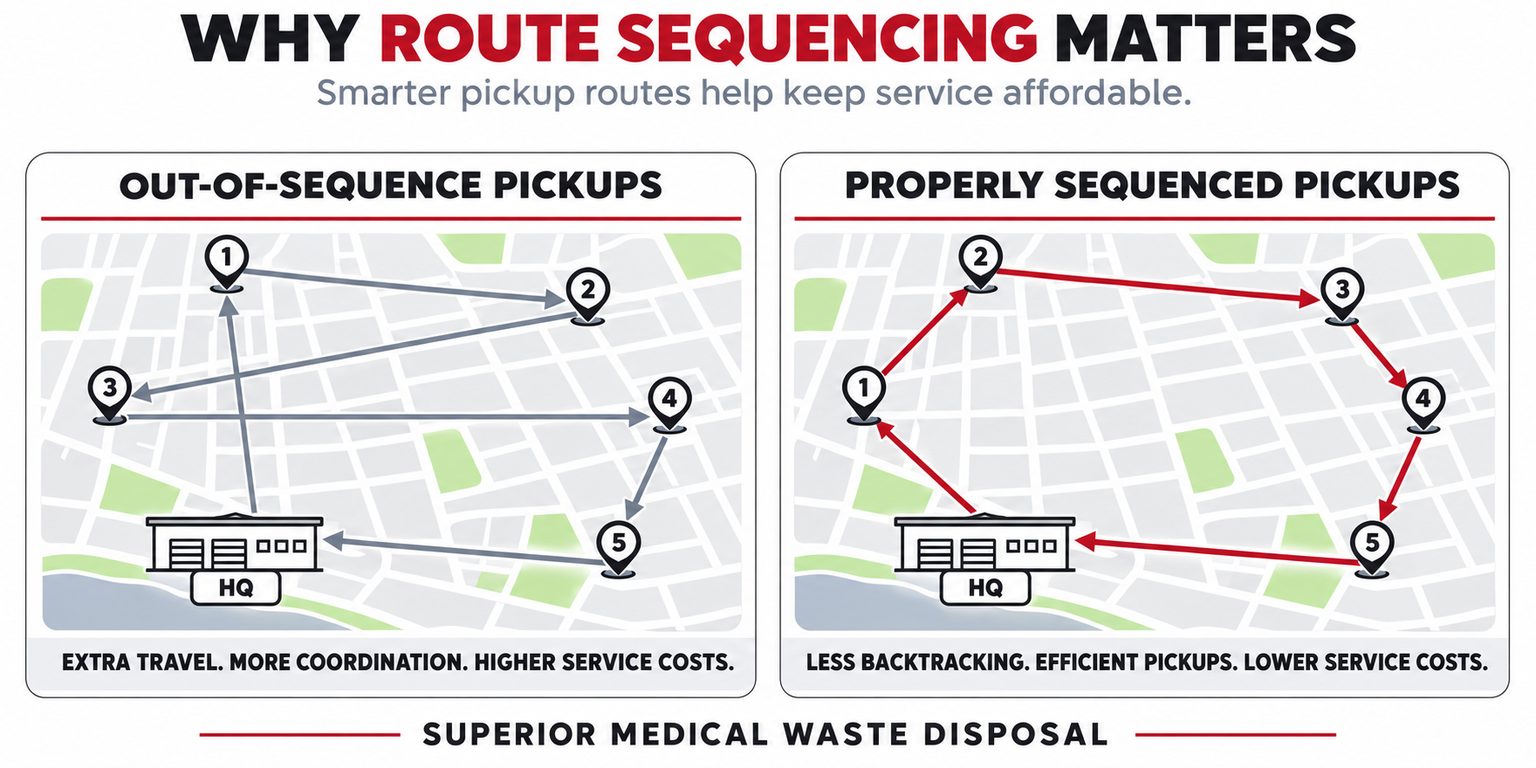
Tattoo studios often open in the afternoon or operate by appointment. Collection routes need to serve multiple businesses in a planned sequence.
Superior operates collection routes between 8 a.m. and 6 p.m. Individual pickup times cannot be reserved. Drivers start in one area and finish in another, following an efficient path between scheduled stops.
Restricting each stop to a specific appointment time can require backtracking and additional driving. Keeping stops in route order helps keep pickup rates lower.
How to prevent problems: Arrange for someone to meet the driver when the route reaches your shop unless an approved alternative access arrangement is established. If your operating hours make access difficult, ask about lock box options before service begins.
Use your portal’s pickup calendar and email reminders to keep your team prepared.
2. Insufficient funds cause a payment to fail
Some shops pay business expenses with a debit or prepaid card linked to a payment app, such as Cash App or Venmo. If the card draws from an available balance, payment can decline when that balance is too low.
Repeated failed payments and unpaid balances can interrupt service or lead to suspension or cancellation under the service agreement.
How to prevent problems: Use a supported payment method with dependable funding, keep billing details current and respond promptly to failed-payment notices.
If you use a balance-funded card, make sure funds are available when payment is due. A billing issue does not pause your waste storage deadlines.
3. Waste is not ready when the driver arrives
Standard collection and hands-on station service are different service levels.
With Standard Scheduled Pickup, your team must separate, prepare and package the waste before the driver arrives. Collection does not include going station to station, replacing bags or packaging loose waste.
How to prevent problems: Assign someone to prepare the shipment before pickup day.
If you want Superior to service stations and package the waste, ask about SSR. Availability and included services vary by location and plan.
Can Superior collect waste from a shop that also offers piercing?
Yes. We offer solutions for both tattooing and piercing and can set up waste removal for both services at your shop.
Tell us about all procedures offered so your container setup and collection plan reflect the whole business.
Do I need to be at pickup personally?
Not necessarily. An appropriate shop representative can meet the driver, or we can discuss approved alternative access arrangements.
With prior authorization, Superior’s digital manifest system allows us to sign FBO—“for benefit of”—on your behalf. We can also photograph the waste removed as an additional pickup record.
Physical access and signing authorization need to be arranged before service.
How do I receive pickup reminders and disposal records?
Superior’s customer portal provides a pickup calendar and access to digital medical waste manifests.
Email reminder options include:
- 24-hour advance notice.
- Same-day notice.
- Both advance and same-day notices.
At service, your manifest is emailed and saved in your portal. The record is updated when the waste is treated according to applicable state requirements, providing cradle-to-grave documentation.
A pickup record documents collection; the subsequent treatment update documents the next stage.
Get Help With Your Michigan Tattoo Shop’s Medical Waste
Whether you run a one-artist studio or a busy tattoo and piercing shop, your waste service should reflect your volume, storage deadlines, operating hours and preferred level of assistance.
Superior can help you compare pickup options, work through your medical waste management plan and arrange staff training.
Get My Tattoo Shop Waste Disposal Quote
Or call 734-656-8843.