
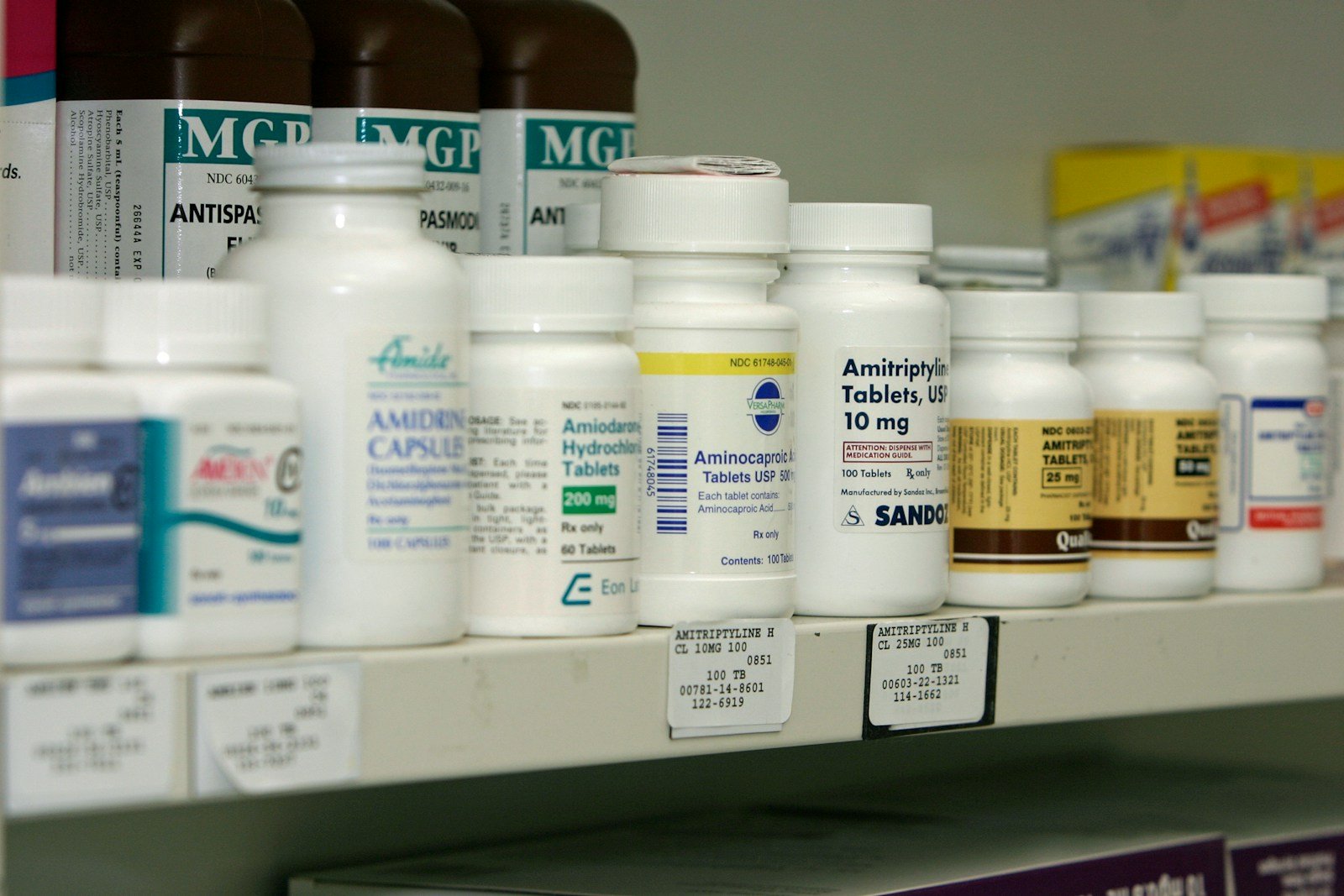
Every healthcare facility in Michigan, Ohio, and Indiana that dispenses, sells, or distributes medications generates pharmaceutical waste. Under the EPA's 2019 rule and state-level regulations, that waste cannot go in the trash, cannot be flushed or poured down a drain, and must be classified, properly contained, and disposed of through a licensed hauler. Whether your facility generates a handful of expired vials a month or manages large volumes of unused prescriptions and chemotherapy residuals, the compliance requirements are the same. Here is what you need to understand.
What Counts as Pharmaceutical Waste
Not all discarded medications are handled the same way. Healthcare facilities manage three distinct categories:
- Hazardous Waste Pharmaceuticals. Prescription and over-the-counter drugs that meet RCRA criteria because they appear on the EPA's P or U hazardous waste lists, or exhibit a hazardous characteristic such as ignitability, corrosivity, reactivity, or toxicity. Warfarin, certain cardiovascular medications, and a number of chemotherapy agents are common examples. Roughly 30 commercial chemical products with pharmaceutical uses appear on the P and U lists.
- Non-Hazardous Pharmaceutical Waste. Expired, unused, or contaminated medications that do not meet RCRA hazardous criteria. These still require proper disposal; they cannot go into the general trash or be flushed. Depending on whether they are DEA-controlled substances, they are handled through licensed pharmaceutical waste haulers or DEA-authorized collection and mail-back programs.
- Trace Chemotherapy Waste. Items contaminated with antineoplastic (cancer-fighting) agents, such as empty vials, IV bags, tubing, syringes, and gloves used during chemotherapy administration. Trace chemo waste is regulated as P-listed hazardous waste under RCRA and requires dedicated yellow containers and disposal through a licensed hazardous waste incinerator.
What the EPA's 2019 Rule Requires
The EPA's Management Standards for Hazardous Waste Pharmaceuticals took effect August 21, 2019. The rule covers every healthcare facility authorized to dispense, distribute, or sell medications, including hospitals, clinics, physician offices, dental practices, veterinary facilities, long-term care facilities, and retail and mail-order pharmacies. There is no size exemption: facilities classified as very small quantity generators must comply with the rule's core provisions, including its drain prohibition.
Two provisions have the most direct operational impact for facility administrators:
- Sewering prohibition. Flushing or pouring hazardous waste pharmaceuticals down a drain is explicitly prohibited. Before this rule, many facilities assumed that flushing was an acceptable disposal method. EPA's analysis prior to the final rule estimated that more than 6,400 tons of hazardous waste pharmaceuticals were being flushed annually by covered businesses and healthcare facilities. The 2019 rule is projected to prevent 1,644 to 2,300 tons from reaching waterways each year.
- Nicotine reclassification. FDA-approved over-the-counter nicotine replacement therapies, including patches, gum, and lozenges, are no longer classified as P075 hazardous waste when discarded. This change reduces the waste classification burden for facilities that stock these products.
EPA Acting Administrator Andrew Wheeler stated upon signing the final rule: "These common-sense updates will help the healthcare sector safely manage hazardous waste pharmaceuticals and will reduce the amount of pharmaceutical waste entering our waterways by roughly 2,000 tons."
How Michigan, Ohio, and Indiana Apply These Requirements
Michigan, Ohio, and Indiana each operate EPA-authorized hazardous waste programs and may establish requirements that are at least as stringent as the federal standard. In Michigan, the Department of Environment, Great Lakes, and Energy (EGLE) administers hazardous waste regulations under Part 111 of the Natural Resources and Environmental Protection Act. Ohio EPA and Indiana's Department of Environmental Management (IDEM) administer comparable state-level programs.
In practice, this means your facility must meet both the federal RCRA requirements under the 2019 rule and any additional state-specific provisions. Superior Medical Waste Disposal holds active operating licenses in Michigan, Ohio, and Indiana and monitors state-level regulatory updates so your team does not have to track those changes internally.
What Compliant Pharmaceutical Waste Disposal Looks Like
Compliance starts at the point of generation and runs through final treatment and documentation:
- Segregation at point of generation. Hazardous pharmaceutical waste must be separated from non-hazardous pharmaceutical waste and from general regulated medical waste at the point of discard. This typically requires labeled containers at medication preparation areas, nursing stations, and pharmacies.
- Compliant containers. Hazardous pharmaceutical waste goes into RCRA-compliant containers appropriate for the waste type. Trace chemotherapy waste requires distinctly marked yellow containers meeting DOT performance standards. Your hauler should supply and maintain compliant containers as part of the service.
- No drain or trash disposal. The sewering ban is absolute for hazardous pharmaceutical waste. Non-hazardous pharmaceutical waste also faces restrictions on landfill disposal under Michigan, Ohio, and Indiana state rules, even when it does not meet RCRA hazardous criteria.
- Uniform Hazardous Waste Manifest. Each pickup of hazardous pharmaceutical waste generates a manifest that tracks the waste from your facility to final treatment and disposal. Your facility retains copies of those manifests as compliance records. Incomplete or missing manifests are among the most common sources of regulatory enforcement actions.
- Licensed treatment and disposal. Hazardous pharmaceutical waste must go to a licensed treatment, storage, and disposal facility (TSDF). Pharmaceutical waste is typically treated through incineration at an EPA- and state-permitted facility.
DEA Controlled Substances: A Parallel Layer of Compliance
If your facility holds a DEA registration and generates controlled substance waste (Schedule II through V), DEA regulations apply in parallel with RCRA. DEA-registered facilities must use DEA-authorized disposal methods, such as reverse distribution through a DEA-registered reverse distributor, a DEA-authorized collection receptacle, or a DEA mail-back program. Superior Medical Waste Disposal can help your facility coordinate pharmaceutical and controlled substance disposal so both regulatory frameworks are met under a single service relationship.
One Provider Across Michigan, Ohio, and Indiana
Superior Medical Waste Disposal provides licensed pharmaceutical waste disposal service for healthcare facilities across Michigan, Ohio, and Indiana. We supply compliant containers, build service schedules around your generation volume, produce Uniform Hazardous Waste Manifests and Certificates of Disposal for every pickup, and work with your compliance team when documentation questions come up. Our CEO was recognized on the Waste360 40 Under 40 list at age 26, and Superior was featured on the Waste360 cover in October 2024.
To discuss service for your facility, call us at (734) 656-8843 or reach out through our contact page.
Frequently Asked Questions
Does the EPA pharmaceutical waste rule apply to our small clinic?
Yes. The 2019 EPA rule applies to all healthcare facilities authorized to dispense, distribute, or sell medications, including those classified as very small quantity generators. There is no size exemption for the sewering prohibition. If your facility dispenses medications, the rule covers you.
Can we put expired or unused medications in the regular trash?
No. Hazardous pharmaceutical waste cannot go in municipal trash or down a drain. Non-hazardous pharmaceutical waste also faces disposal restrictions under Michigan, Ohio, and Indiana state regulations, even when it does not meet federal RCRA hazardous criteria. A licensed pharmaceutical waste hauler handles both categories compliantly.
What records do we need to keep for pharmaceutical waste pickups?
For RCRA hazardous pharmaceutical waste, you must retain copies of the Uniform Hazardous Waste Manifest for each pickup. Federal regulations require a minimum three-year retention period; Michigan, Ohio, and Indiana may require longer. Keeping those records in your compliance files is essential, since auditors routinely request them and documentation gaps are a common enforcement trigger.
How does pharmaceutical waste disposal work if we also have DEA-controlled substances to dispose of?
RCRA pharmaceutical waste rules and DEA regulations apply in parallel. Schedule II through V controlled substances require DEA-authorized disposal methods separate from standard pharmaceutical waste collection. A licensed hauler familiar with both regulatory frameworks can help your facility coordinate those two streams so you are not managing them through different service relationships.
Does Superior Medical Waste Disposal handle trace chemotherapy waste?
Yes. We handle trace chemotherapy waste as part of our pharmaceutical waste service for facilities that generate it. Trace chemo waste requires yellow DOT-compliant containers and disposal through a licensed hazardous waste incinerator, and we supply and service those containers along with your other waste streams.