
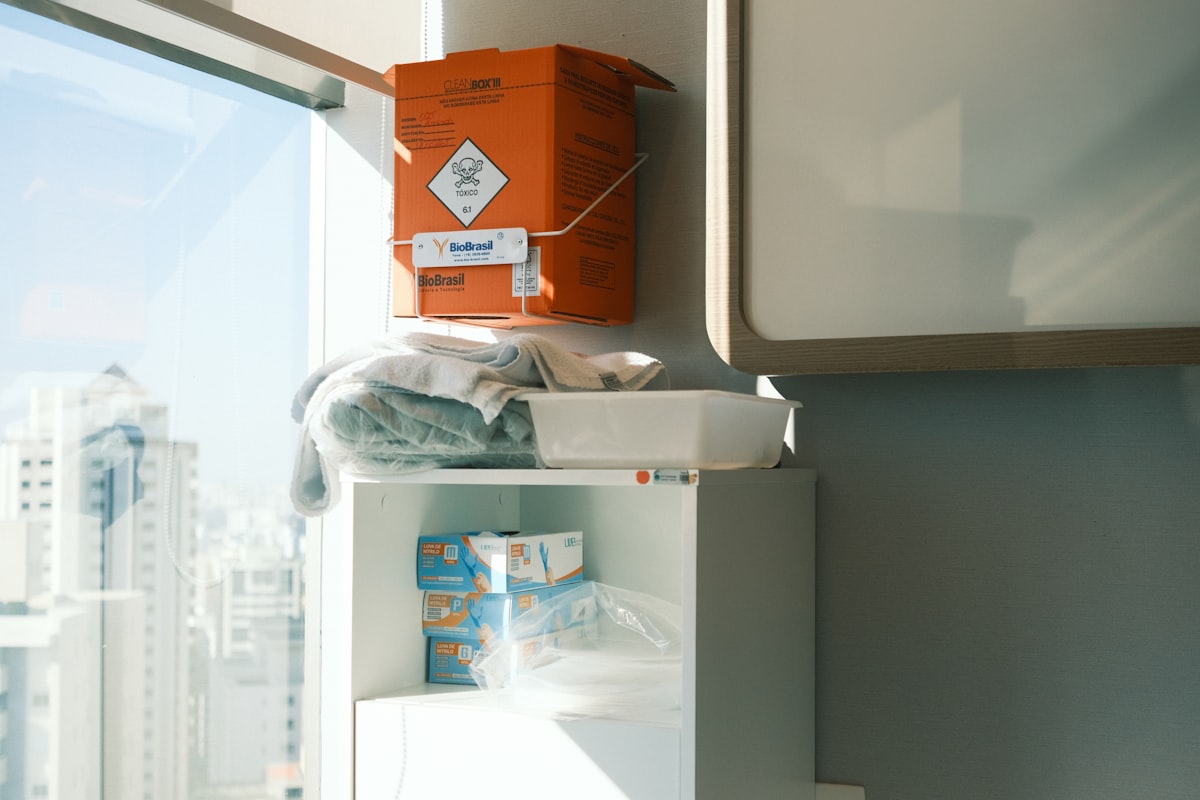
Michigan regulates the management of biomedical and regulated medical waste (RMW) under Part 138 of the Natural Resources and Environmental Protection Act (Public Act 451 of 1994), administered by the Michigan Department of Environment, Great Lakes, and Energy (EGLE). Healthcare facilities that generate, store, transport, treat, or dispose of RMW—ranging from physician offices and dental clinics to hospitals and veterinary practices—must comply with specific requirements at each stage of the waste stream. Non-compliance carries penalties up to $25,000 per day per violation and, in cases involving improper disposal, potential criminal prosecution.
This guide covers what qualifies as regulated medical waste under Michigan law, generator obligations, storage requirements, approved treatment and disposal methods, and what to look for in a licensed waste hauler.
What Is Regulated Medical Waste Under Michigan Law?
Michigan's Part 138 defines biomedical waste as waste generated from the diagnosis, treatment, or immunization of human beings or animals. Regulated medical waste includes the following categories:
- Sharps waste: needles, syringes, lancets, scalpel blades, broken glass from laboratory settings, and any device designed to puncture or cut skin.
- Pathological waste: tissues, organs, body parts, and fluids removed during surgery, autopsy, or biopsy.
- Microbiological waste: laboratory cultures, stocks, specimens, and related materials used in research or clinical diagnostics.
- Blood and blood products: liquid blood, serum, plasma, and blood-soaked materials that would release blood if compressed.
- Isolation waste: materials from patients with highly communicable diseases, per CDC or MDHHS isolation guidelines.
Note: Paper, plastics, and general clinical waste that have not been in contact with regulated categories are typically not classified as RMW under Part 138, even if generated in a healthcare setting. Misclassifying non-regulated waste as RMW inflates disposal costs unnecessarily; misclassifying RMW as non-regulated waste is a violation.
Generator Classifications and Obligations
Michigan distinguishes between generator sizes, though Part 138 applies broadly to any generator of biomedical waste. At minimum, all generators must:
- Store RMW in labeled, leak-resistant, puncture-resistant containers appropriate for each waste category.
- Use only EGLE-licensed transporters for off-site pickup and transport.
- Maintain records of all RMW manifests and waste shipments for a minimum of 3 years.
- Train all staff who handle RMW on proper containment, labeling, and emergency procedures.
Facilities generating sharps waste also have specific obligations under OSHA's Bloodborne Pathogens Standard (29 CFR 1910.1030), which requires documented exposure control plans, sharps injury logs, and annual training for all at-risk employees.
Storage Requirements: Containers, Labeling, and Time Limits
Proper storage is where many facilities receive citations. Part 138 sets specific requirements:
- Containers: Sharps must be stored in rigid, puncture-resistant, leak-proof containers (standard red sharps containers). Soft-sided or overfilled containers are not compliant. Other RMW must be stored in leak-proof, sealed plastic bags or rigid containers clearly marked with the biohazard symbol.
- Labeling: All RMW containers must bear the universal biohazard symbol, the word "BIOMEDICAL WASTE," and the name and address of the generating facility.
- Temperature and time limits: RMW stored at or below 32°F may be held on-site for up to 30 days. RMW stored above 32°F (room temperature) must be removed within 7 days. Many Michigan facilities operating without refrigerated storage are out of compliance on this requirement without realizing it.
- Location: Storage areas must be secured from public access and kept separate from general waste streams.
Approved Treatment and Disposal Methods
Michigan Part 138 specifies that RMW must be treated before final disposal to render it non-infectious. Approved treatment methods include:
- Steam sterilization (autoclave): The most common method for non-sharps waste. The autoclave must achieve a minimum temperature of 250°F (121°C) at 15 PSI for at least 30 minutes. Facilities operating their own autoclaves must maintain time-temperature logs for each load and document efficacy testing.
- Incineration: Requires a separate air quality permit from EGLE. Most healthcare facilities use licensed third-party incinerators.
- Alternative treatment technologies: Chemical disinfection and other methods may be approved by EGLE on a case-by-case basis. Microwave treatment is approved for some waste categories.
After proper treatment, treated RMW may be disposed of as general solid waste in a licensed landfill. Untreated RMW cannot be disposed of in the general waste stream under any circumstances.
Transportation: Licensing and Manifest Requirements
Under Michigan law, only EGLE-licensed biomedical waste transporters may remove RMW from a generator's facility. Using an unlicensed hauler—even as a cost-saving measure—transfers full legal liability to the generating facility for any improper disposal downstream.
A proper Michigan RMW manifest includes: generator name and address, waste category and estimated quantity, transporter license number, and final destination facility. Both the generator and transporter must sign the manifest, and the generator must retain a copy for 3 years. If the manifest is not returned within 30 days of pickup, the generator is required to contact EGLE.
According to Dr. Joshua Sharfstein, Professor at the Johns Hopkins Bloomberg School of Public Health and former Deputy Commissioner of the U.S. Food and Drug Administration, regulatory accountability in medical waste management is a direct function of documentation integrity—facilities that maintain rigorous manifest tracking are substantially less likely to face enforcement action and more likely to identify disposal problems before they become violations.
What to Look for in a Michigan Medical Waste Service Provider
Not all licensed waste haulers provide the same level of service or documentation support. Before contracting with a provider, verify:
- Active EGLE license: Search the EGLE licensed transporter database to confirm current licensure. A license that lapsed 60 days ago is still an unlicensed transporter for compliance purposes.
- Clear manifest procedures: The provider should return completed manifests within 30 days of each pickup. Providers who don't offer copies or are vague about documentation are a red flag.
- Appropriate container supply: A compliant provider includes properly labeled, approved containers in the service agreement. Facilities should not be sourcing containers independently.
- Staff training documentation: For facilities where the provider also trains staff on waste segregation, verify they provide documentation of training dates and employees trained.
Common Compliance Failures EGLE Cites
Based on patterns in EGLE inspection reports, the most frequent Part 138 violations among Michigan healthcare generators include:
- RMW stored at room temperature beyond 7 days
- Overfilled sharps containers (fill line exceeded)
- Missing or incomplete labeling (no facility name/address on containers)
- Incomplete manifest records or failure to retain 3-year documentation
- Using an unlicensed transporter
- Failure to document autoclave efficacy testing
Michigan EGLE conducts both routine and complaint-triggered inspections. Facilities found in violation receive a Notice of Violation and, depending on severity and history, fines ranging from $200 per day for administrative violations to $25,000 per day for repeat or intentional violations.
FAQ
Does a small dental or physician practice need to comply with Part 138?
Yes. Part 138 applies to any generator of regulated medical waste in Michigan, regardless of facility size. A single-provider dental practice generating sharps and biohazardous material is subject to the same container, storage, and transport requirements as a hospital. The volume of waste generated does not change the compliance obligation.
Can I dispose of sharps containers in regular trash after autoclaving?
Only if the container has been properly steam sterilized, documented with time-temperature logs confirming efficacy, and the exterior of the container is labeled to indicate it has been treated. Most facilities use licensed third-party disposal rather than in-house autoclaving to maintain a cleaner compliance record.
What happens if EGLE finds us out of compliance?
First-time, minor violations typically result in a Notice of Violation with a compliance schedule. Repeat violations, large quantities of improperly disposed waste, or violations involving public health risk can result in fines, stop-work orders, and in cases of intentional illegal disposal, criminal charges. The reputational and legal costs of a publicized violation generally far exceed the cost of compliant disposal.
How often does Michigan require manifests for routine pickups?
A manifest is required for every off-site transfer of RMW, regardless of quantity. There is no volume threshold below which manifests can be skipped. Each pickup—whether weekly, monthly, or on-demand—requires its own manifest signed by both the generator and the licensed transporter.
Does Superior Medical Waste Disposal serve the full state of Michigan?
Yes. We service healthcare generators across Michigan, from Upper Peninsula locations to metro Detroit and the West Michigan corridor. Contact us for a compliance assessment and service quote for your facility's specific waste volume and waste categories.