
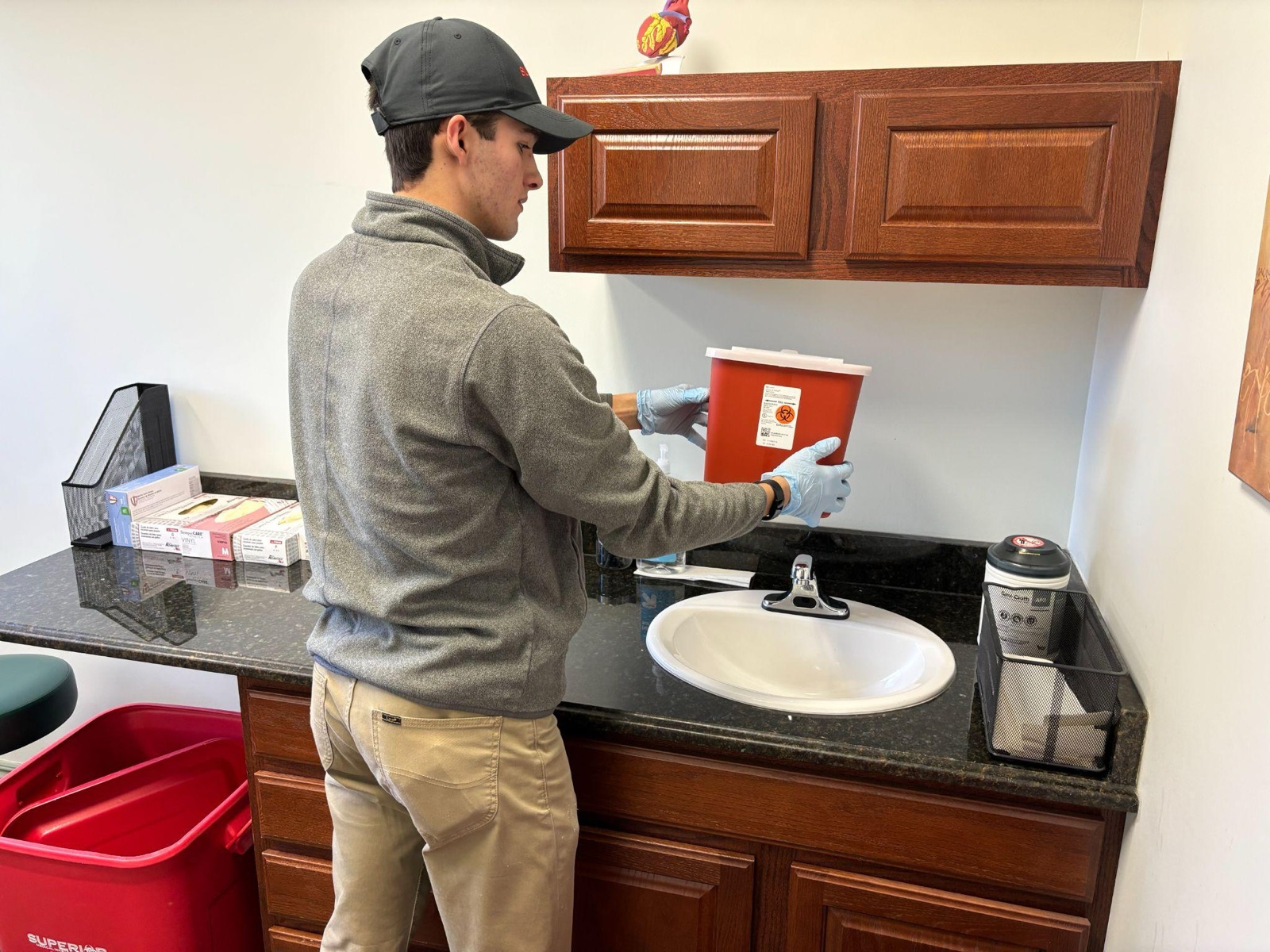
Many Michigan veterinary practices operate for years without formal regulated medical waste (RMW) disposal in place, assuming that animal waste is categorically different from human medical waste and therefore exempt from the rules. It is not. Michigan's Medical Waste Regulatory Act (Part 138 of the Public Health Code, 1978 PA 368) covers animal blood, body fluids and contaminated animal waste, names veterinarians among the practitioners whose offices register as producing facilities, and EGLE applies the same registration, storage, packaging, and treatment requirements to animal clinics that it does to physician offices and outpatient healthcare facilities.
The Occupational Hazard Behind the Rule
The public health case for regulating veterinary sharps starts with the people who handle them. A survey of 831 Minnesota veterinary workers published in the Journal of the American Veterinary Medical Association found that 77%, more than three in four, reported being injured by a needle or other sharp object during their careers. The same study found that 87% of respondents reported recapping needles, a practice long associated with needlestick injuries.
A separate NIOSH-funded study of 2,532 female US veterinary college graduates found that 63.9% had experienced at least one needlestick since graduation, at a rate of 9.3 sticks per 100 person-years of practice, a rate the study describes as similar to those reported among healthcare workers including nurses, laboratory technicians and hospital housekeeping staff. These are not edge-case events; they are common occurrences in practices that lack standardized sharps handling protocols.
Peter Leggat of James Cook University's Anton Breinl Centre for Public Health and Tropical Medicine, writing with colleagues in the Journal of Occupational Medicine and Toxicology, put it plainly: "The exposure rate of NSI [needlestick and sharps injuries] is high for Queensland veterinarians and clearly remains a major occupational health problem."
What Michigan Part 138 Requires for Veterinary Practices
Under MCL 333.13805, medical waste includes these categories a veterinary practice generates:
- Sharps: needles, syringes, scalpels, and intravenous tubing with needles attached, as the Act defines them
- Liquid animal waste: blood, blood products and body fluids (the Act excludes urine and materials merely stained with blood or body fluids)
- Contaminated animal waste: waste from animals that have been exposed to agents infectious to humans
- Cultures and stocks of infectious agents and associated biologicals, including laboratory culture dishes and devices
The compliance requirements are the same as for human healthcare generators:
- Rigid, puncture-resistant, labeled sharps containers: leakproof, secured so the contents cannot spill, labeled with the biohazard symbol or the word "sharps", and closed once they reach three-quarters full
- Secure on-site storage: containers kept closed, away from the public and vermin, with a 90-day storage limit for most waste; under MCL 333.13809, as amended in 2024, a sharps container may stay in use until it is three-quarters full, but no longer than 18 months from the first sharp dropped in
- Transport under US DOT rules: Michigan issues no separate transporter permit; off-site transport of medical waste falls under US DOT hazardous materials rules for Division 6.2 infectious substances, adopted by the Michigan Motor Carrier Safety Act, so your hauler must package, document and move it as a hazmat shipper. EGLE publishes a list of registered medical waste disposal services; Superior's EGLE registration is MW0050734
- Treatment and disposal by an approved method: MCL 333.13811 sets the allowed methods for each category, such as autoclaving or incineration for cultures and stocks, incineration or double-contained landfill burial for contaminated animal waste, and rigid labeled containers for sharps
- Registration with EGLE: every producing facility registers, whatever its volume; Michigan has no weight threshold. Under MCL 333.13813 a private practice office with fewer than four licensed practitioners (veterinarians included) pays a $50 fee, the certificate runs three years, and the facility keeps a written medical waste management plan on site
Common Compliance Gaps in Veterinary Practices
The gaps we see most often when a veterinary practice has no formal RMW program:
- Sharps disposed in red bags instead of rigid containers: red bags are not puncture-resistant and are not compliant containers for sharps, even if they carry a biohazard symbol
- No shipment records: EGLE's Producers Pocket Reference says documentation showing waste was removed and properly treated must be available at inspection for at least three years; practices using an informal hauler often have no records at all
- Overfilled sharps containers: a needlestick risk during waste handling, and a rule as well; MCL 333.13809 says a sharps container is closed and removed once it is three-quarters full
- Mixing regulated waste with general trash: blood, body fluids, contaminated animal waste and sharps that end up in standard trash bags are a Part 138 violation and a worker safety issue
- Using a standard waste hauler: a general trash contractor is not set up to package, document and ship Division 6.2 infectious substances under US DOT rules, and leaves you without the shipment records EGLE expects
How Superior Medical Waste Disposal Serves Veterinary Practices
Superior Medical Waste Disposal runs scheduled RMW pickup programs for veterinary clinics, animal hospitals, and specialty practices throughout Michigan. The service structure is the same as for human healthcare facilities:
- Container sizing and setup: SMWD provides complimentary biohazard containers and sharps containers sized to your practice's volume. A small-animal clinic sees different volumes than an equine hospital; container selection is matched accordingly.
- Scheduled service: pickups run weekly, bi-weekly, monthly, quarterly or on a custom schedule matched to your generation volume and the storage clock. High-volume surgical and emergency hospitals may need weekly service; smaller companion-animal practices often do well on a monthly or quarterly schedule.
- Manifested and documented: every pickup is signed on a shipping document and emailed to your office, and the records live in Superior's online customer portal, so the paper trail EGLE and your local health department expect is ready for inspection.
- Destruction documentation: records confirming your waste was processed at a licensed medical waste treatment facility, kept with your manifests in one place.
Frequently Asked Questions
Is veterinary animal waste really treated the same as human medical waste under Michigan law?
Yes. Michigan Part 138 defines medical waste to include liquid animal waste such as blood and body fluids, and contaminated waste from animals exposed to agents infectious to humans. Veterinarians are named in the Act's registration fee schedule, and EGLE's own Medical Waste Directory carries a veterinary clinic table of items and how to dispose of each.
We're a small practice. Do we still need to register with EGLE?
Yes. Michigan has no small-generator exemption: every facility that generates medical waste registers with EGLE through MiEnviro, keeps a written medical waste management plan on site, and renews every three years. A private practice office with fewer than four licensed practitioners pays a $50 registration fee. SMWD can walk you through the MiEnviro setup during a service consultation.
Can we use the sharps mail-back programs sold in veterinary supply catalogs?
Mail-back containers are one disposal route, but you are still the registered producing facility: the 90-day storage clock, the three-quarters-full sharps rule and the three-year record requirement apply whichever way the container leaves the building, and a steady stream of sharps usually outgrows a per-box program. Scheduled pickup gives you signed shipping records, predictable service, and complimentary containers sized to your volume.
What about sharps from farm calls or large-animal work?
Treat them the same way as sharps generated in the clinic: carry a rigid, puncture-resistant, labeled sharps container in the vehicle, bring it back to the practice, and dispose of it through the same program. SMWD can work with mixed large/small-animal practices to structure a program that covers both clinic-generated and field-collected waste.
How do we get started?
Call (734) 656-8843 or use the contact page to request a service consultation. SMWD will review your practice's generation volume, confirm the right container and schedule, and set your program up to Part 138 requirements from the first service date.
Get Your Veterinary Practice into Compliance
Michigan Part 138 covers a veterinary practice's sharps, liquid animal waste and contaminated animal waste just as it covers a physician office's. A practice with improperly managed sharps or animal waste faces the same inspection findings as a physician office in the same situation. Contact Superior Medical Waste Disposal to schedule a consultation and get your program structured correctly.