
Introduction
The safe disposal of medical instruments is a critical concern in healthcare, primarily due to the significant threat posed by needlestick injuries to both workers and patients. Sharps containers, specifically designed for this purpose, are essential in mitigating these risks and ensuring compliance with safety regulations. As the landscape of medical waste management evolves, it is crucial to evaluate the effectiveness of current disposal methods and to understand the definition of sharps containers.
What key characteristics make these containers indispensable in modern healthcare settings? Their proper use not only enhances safety but also reinforces compliance with regulatory standards. By focusing on these aspects, we can better appreciate the vital role that sharps containers play in protecting healthcare professionals and patients alike.
Define Sharps Container: Essential Characteristics and Purpose
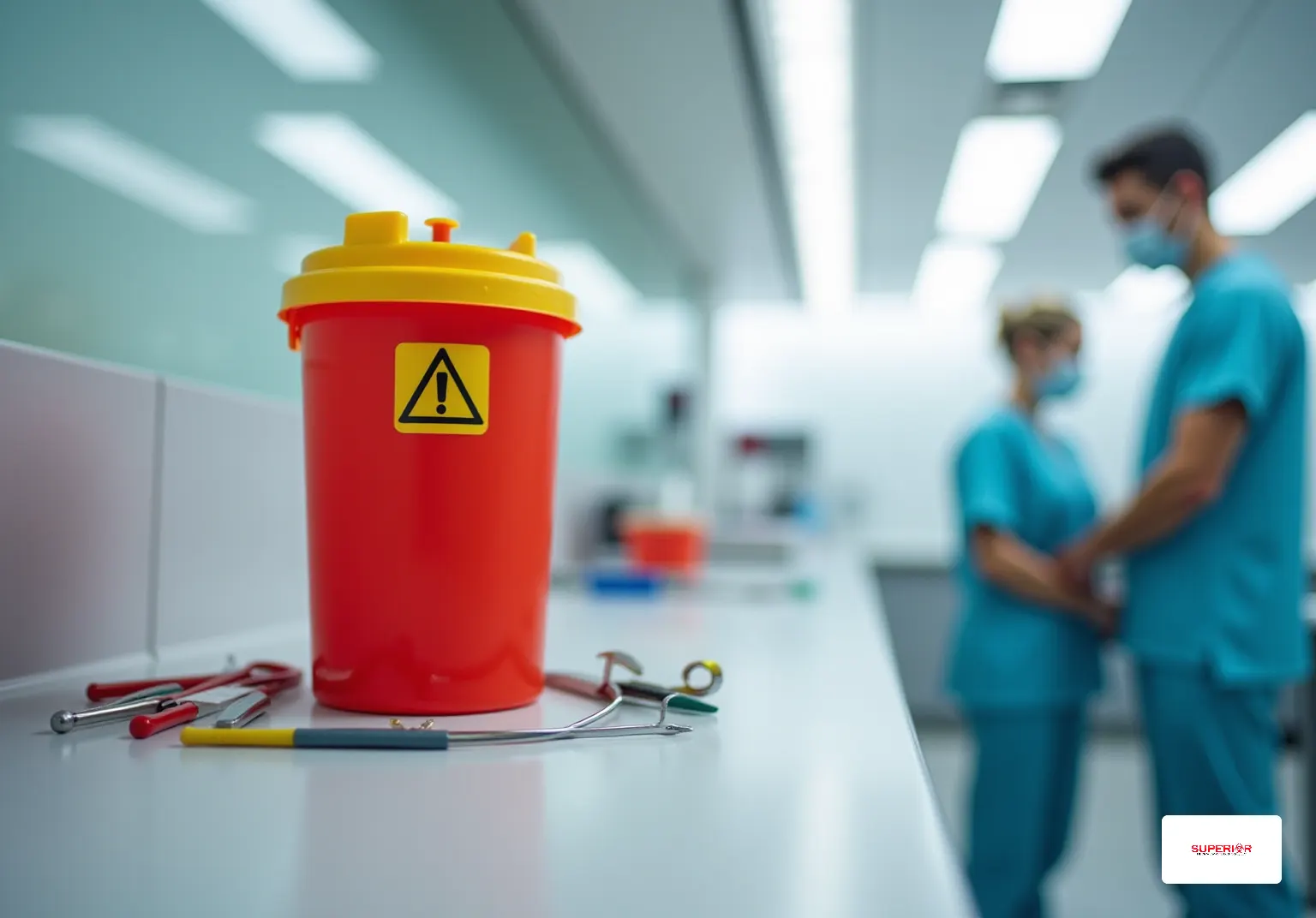
The sharps container indicates that it serves as a specialized receptacle designed for the safe disposal of pointed medical instruments, such as needles, scalpels, and other items that pose a risk of puncturing the skin. These bins are constructed from durable materials and feature secure lids to prevent accidental exposure to their hazardous contents. The sharps container indicates that its primary function is to significantly reduce the risk of injury and the transmission of bloodborne pathogens, thereby safeguarding medical workers, patients, and the environment.
Statistics reveal that approximately 385,000 needlestick injuries occur annually among healthcare workers in the United States, highlighting the urgent need for effective disposal solutions. The FDA mandates that these receptacles must adhere to specific safety standards, which align with the best practices, ensuring they are robust enough to safely contain hazardous materials. Real-world examples, such as the Kaiser Permanente settlement due to improper disposal practices, underscore the importance of compliance in healthcare settings.
A disposal company offers professional needle disposal services, utilizing high-quality, puncture-resistant receptacles and a comprehensive disposal process that complies with Ohio EPA regulations. Medical experts emphasize that understanding the regulations and the proper use of sharps containers is essential for maintaining a safe environment and preventing injuries, making them a critical component of healthcare safety. Furthermore, the inclusion of document destruction services enhances the overall safety and compliance of medical facilities.

Contextualize the Importance of Sharps Containers in Healthcare
Sharps bins play a crucial role in medical environments due to the significant risks associated with handling sharp objects. These risks can result in severe health consequences, including the transmission of infectious diseases such as HIV, hepatitis B, and hepatitis C. According to OSHA, approximately 385,000 injuries occur annually among healthcare workers in the U.S., underscoring the urgent need for effective safety measures.
Sharps containers, which are described in the guidelines, are an essential element of a comprehensive safety program designed to protect healthcare personnel. Safety is not merely a concern; according to the regulations, it is also a legal obligation under various regulations, including OSHA standards and state health codes. In Ohio, the Ohio EPA recommends that all infectious materials, including needles, be sent to a commercial treatment facility, with autoclaving being the preferred method for managing regulated medical refuse (RMR). The facility collaborates with a commercial autoclaving facility to ensure the safe and compliant treatment of medical waste.
By adhering to these guidelines and ensuring proper needle disposal, medical facilities can significantly mitigate risks, enhance safety, and maintain compliance with health and safety regulations. Furthermore, utilizing and following OSHA guidelines for needle disposal can further reduce the incidence of sharps-related injuries, fostering a safer working environment for all healthcare professionals.
Additionally, it is vital to provide training, as mandated by OSHA, to ensure they are aware of the hazards and proper disposal methods. Storage requirements for infectious materials must also be strictly followed; receptacles should remain in a non-putrescent condition, and areas must be clearly marked with appropriate signage. Practical recommendations, such as using FDA-approved disposal bins, avoiding overfilling, and refraining from recapping needles, can further enhance safety protocols in medical settings, as described by the guidelines.

Trace the Evolution of Sharps Containers: Historical Insights
The evolution of disposal units reflects a growing awareness of the risks associated with improper disposal, particularly in regions like Traverse City, where facilities such as Munson and Byers Heather generate medical waste. In the past, needles were often discarded in regular trash, resulting in numerous injuries and infections among healthcare workers and the public. The introduction of sharps containers in the late 20th century marked a pivotal shift in practices. While initial designs were rudimentary, advancements in safety protocols have led to increasingly sophisticated disposal vessels.
Modern disposal units are constructed from advanced materials and feature innovations such as leak-proof designs and secure locking mechanisms, underscoring a commitment to safety and compliance with regulations. Regulatory bodies, including the FDA, have established stringent guidelines that manufacturers must adhere to, ensuring these units meet high safety standards. This evolution not only enhances the safety of healthcare professionals but also significantly reduces the risk of needlestick injuries, which have declined over the years due to improved design and management of disposal units.
Case studies from Traverse City illustrate the transition from conventional trash disposal to specialized units, highlighting their critical role in safeguarding public health. For instance, local hospitals have adopted sharps containers, further mitigating disease transmission risks and supporting environmental sustainability. As medical services continue to advance, particularly in Michigan, Ohio, and Indiana, the design and functionality of needle disposal units are expected to evolve, reflecting ongoing improvements in safety, compliance, and waste management practices. The COVID-19 pandemic has underscored the urgent need for enhanced safety measures, making the role of sharps containers more relevant than ever for the development of sharps units. This organization offers tailored solutions for medical facilities, ensuring safety and promoting best practices.

Explore Types and Designs of Sharps Containers: Features and Uses
designed in various types and configurations to address specific needs. They can be categorized into:
- Wall-mounted receptacles
- Portable options
- Large-capacity bins tailored for high-volume areas
Essential features such as puncture resistance, leak-proof construction, and secure lids are standard across all designs, ensuring the safety of users. For example, wall-mounted receptacles are particularly effective in patient rooms, providing easy access while minimizing the risk of spills. Conversely, portable containers are crafted for mobile medical settings, such as home care visits or community vaccination events, where convenience and safety are paramount. Some models even include foot pedals, which reduce hand contact and enhance hygiene. Understanding these distinctions is vital for healthcare institutions to ensure proper disposal and effectively protect both personnel and patients from potential hazards associated with needle disposal.
At our organization, we emphasize the importance of safe disposal practices, including needles. Our specialized collection and disposal service utilizes advanced containers for secure handling and disposal, ensuring compliance with all state and federal regulations. Additionally, we provide digital shipping documents that track your materials from collection to treatment, ensuring transparency and adherence throughout the disposal process. The market for sharps disposal is growing at a CAGR of 5.13%, underscoring the increasing demand for efficient disposal solutions. Furthermore, the Gen 5 Sharpsafe receptacles utilize recycled polymers, highlighting the importance of eco-friendliness in modern waste management for medical instruments. Safety is also critical for safeguarding healthcare workers, which makes the design of sharps containers a key consideration for the design and functionality of healthcare facilities.

Conclusion
Understanding the definition and importance of sharps containers is essential in the healthcare sector. These specialized receptacles play a critical role in maintaining safety and compliance. Specifically designed for the safe disposal of sharp medical instruments, sharps containers significantly reduce the risks associated with needlestick injuries and the transmission of bloodborne pathogens. This protection extends to healthcare workers, patients, and the environment.
Key characteristics of sharps containers include their puncture-resistant materials and secure lids. Legal obligations surrounding their use are also crucial, supported by regulations from OSHA and the FDA. Additionally, the evolution of sharps disposal methods highlights advancements in design and safety. Various types of containers cater to the specific needs of medical environments, thereby enhancing overall safety protocols.
The significance of sharps containers goes beyond mere compliance; they are vital tools in fostering a safe healthcare environment. By prioritizing proper disposal practices and adhering to regulatory standards, healthcare facilities can greatly reduce the incidence of needlestick injuries. As the landscape of medical waste management continues to evolve, the commitment to effective sharps disposal solutions remains paramount for the safety and well-being of all involved in healthcare.
Frequently Asked Questions
What is a sharps container?
A sharps container is a specialized receptacle designed for the safe disposal of pointed medical instruments, such as needles and scalpels, which pose a risk of puncturing the skin.
What are the essential characteristics of a sharps container?
Sharps containers are constructed from puncture-resistant materials and feature secure lids to prevent accidental exposure to hazardous contents.
What is the primary purpose of a sharps container?
The primary purpose of a sharps container is to significantly reduce the risk of needlestick injuries and the transmission of bloodborne pathogens, thus safeguarding medical workers, patients, and the environment.
How prevalent are needlestick injuries among healthcare workers?
Approximately 385,000 needlestick injuries occur annually among healthcare workers in the United States.
What regulations must sharps containers adhere to?
The FDA mandates that sharps containers must adhere to specific safety standards to ensure they are robust enough to safely contain hazardous materials.
Can you provide an example of the importance of proper sharps disposal?
The Kaiser Permanente settlement due to improper disposal practices highlights the importance of compliance in medical waste management.
What services does Superior Medical Disposal offer regarding sharps disposal?
Superior Medical Disposal offers professional needle disposal services, utilizing high-quality, puncture-resistant receptacles and a comprehensive disposal process that complies with Ohio EPA regulations.
Why is understanding the sharps container definition important for medical facilities?
Understanding the sharps container definition and the proper use of disposal bins is essential for maintaining a safe environment and preventing injuries, making them a critical component of medical waste management.
What additional services can enhance safety in medical facilities?
The inclusion of document destruction services can enhance the overall safety and compliance of medical facilities.
List of Sources
- Define Sharps Container: Essential Characteristics and Purpose
- health.westlab.com (https://health.westlab.com/news/everything-you-need-to-know-about-sharps-containers)
- wastedoor.com (https://wastedoor.com/article/sharps-medical-waste-disposal-guide)
- The Vital Role of Sharps Containers in Public Health (https://mycomedical.com/post/the-vital-role-of-sharps-containers-in-public-health)
- coherentmarketinsights.com (https://coherentmarketinsights.com/industry-reports/medical-waste-container-market)
- Contextualize the Importance of Sharps Containers in Healthcare
- owenmumford.com (https://owenmumford.com/us/needle-stick-injury-a-widespread-issue)
- The global challenge of needlestick injuries in healthcare – BD IV News (https://eu.bd.com/iv-news/scientific-publications/the-global-challenge-of-needlestick-injuries-in-healthcare)
- wjbf.com (https://wjbf.com/business/press-releases/ein-presswire/794914642/tampa-medical-waste-disposal-company-addresses-surge-in-needlestick-injuries-with-informative-guide)
- rnfa.org (https://rnfa.org/april-2025-sharps-safety-in-the-or)
- Trace the Evolution of Sharps Containers: Historical Insights
- paho.org (https://paho.org/en/news/27-10-2025-how-countries-americas-are-strengthening-their-capacity-safe-medical-waste)
- newswise.com (https://newswise.com/articles/remedi-achieves-milestone-in-medical-waste-recycling-moving-healthcare-beyond-incineration-and-landfill)
- The Healthcare Waste Challenge: Why Traditional Methods Are Failing America’s Healthcare System – Amlon (https://amlongroup.com/news/the-healthcare-waste-challenge-why-traditional-methods-are-failing-americas-healthcare-system)
- waste360.com (https://waste360.com/industry-insights/americans-double-sharps-disposal-in-past-10-years)
- Explore Types and Designs of Sharps Containers: Features and Uses
- sharpsafe.com.au (https://sharpsafe.com.au/resources/news/news-04-12-2023)
- The Vital Role of Sharps Containers in Public Health (https://mycomedical.com/post/the-vital-role-of-sharps-containers-in-public-health)
- postmedical.com (https://postmedical.com/medical-innovations-in-sharps-disposal-management)
- sperresearch.com (https://sperresearch.com/report-store/sharps-containers-market)