
Introduction
Healthcare facilities face significant challenges in managing medical waste, which can pose serious health risks and legal repercussions if mishandled. We will explore the nine essential categories of medical waste and emphasize the importance of effective classification and disposal practices. As regulations evolve, facilities must ensure they are equipped to manage diverse waste streams safely and efficiently.
Infectious Waste: Understanding Its Risks and Management
Handling infectious materials requires meticulous attention to safety protocols to prevent disease transmission. Infectious material is classified within the medical waste categories, as it includes any refuse that may contain pathogens capable of causing disease in humans. This includes items such as:
- Blood-soaked materials
- Cultures
- Contaminated sharps
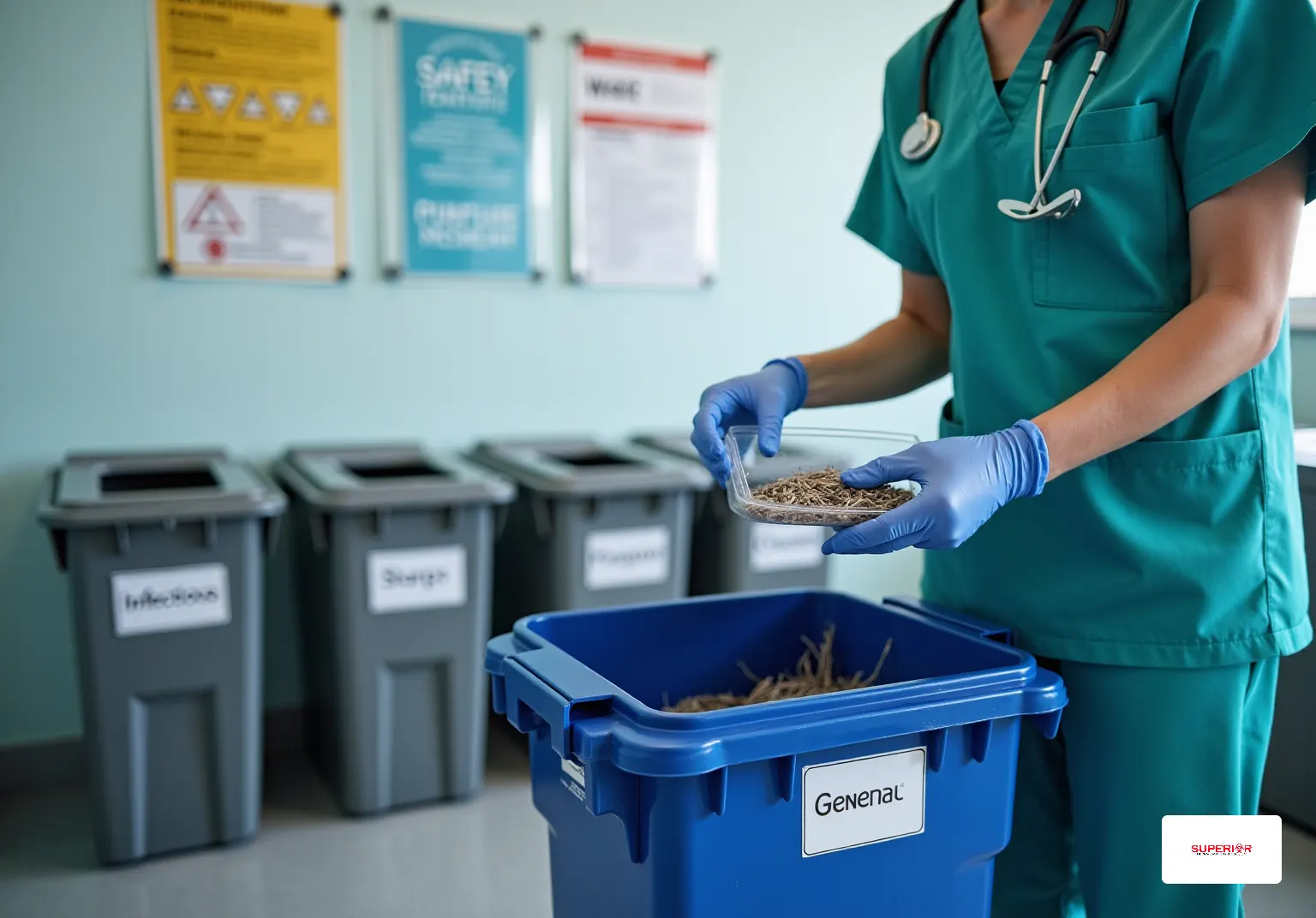
To manage infectious materials effectively, it is crucial to separate them right from the point of creation, utilizing color-coded containers. Furthermore, refuse should be handled through methods like autoclaving or incineration. At Superior Medical Waste Disposal, we ensure that biohazard materials are not only autoclaved but also shredded to reduce volume by 70% before disposal.
Facilities must train staff on the risks associated with infectious materials. Additionally, they should implement protocols for safe handling to minimize exposure and prevent outbreaks. Adhering to local regulations, like the 90-day storage guideline in Michigan, Ohio, and Indiana, is crucial for efficient management and safety. Non-compliance with these guidelines not only jeopardizes public health but also exposes facilities to legal repercussions.

Pathological Waste: Proper Disposal Practices for Healthcare Facilities
The handling of pathological materials requires meticulous attention due to their potential infectious nature and the associated regulatory requirements. Proper disposal practices require designated containers that are leak-proof and puncture-resistant. Healthcare facilities must ensure that this refuse is incinerated or treated effectively to destroy pathogens, such as through autoclaving, which uses steam heat to eliminate biological threats. In Michigan, regulations specify that biohazard materials must be stored for no longer than 90 days before proper removal by a licensed medical refuse hauler.
Educating personnel on the importance of appropriate segregation is essential, as improper handling can lead to serious legal consequences. Fines for infractions concerning the storage, labeling, or management of medical materials can range from $1,000 to $25,000 daily. Routine adherence assessments and record updates are vital for adapting to regulatory modifications and fostering a culture of safety regarding refuse disposal.
Effective methods for handling the disposal of human tissues and organs involve conducting yearly training and exercises on spill response and exposure incidents, which are crucial for compliance. Additionally, best practices for incinerating pathological materials include ensuring that incinerators operate at the correct temperatures to guarantee complete pathogen destruction. Following these guidelines helps healthcare facilities uphold safety standards and comply with regulations, ultimately protecting both staff and patients from potential hazards.

Sharps Waste: Safe Handling and Disposal Techniques
Sharps materials, including needles and blades, present significant injury risks in healthcare settings, necessitating stringent management practices. Healthcare facilities must prioritize the provision of puncture-resistant containers that are easily accessible to staff to manage sharps safely. These containers should be disposed of when they are three-quarters full, as overfilling can lead to accidents and injuries.
Contacting local environmental authorities for sharps waste management regulations is crucial for compliance. Training personnel on the importance of prompt removal after use is vital, as improper handling can lead to needlestick injuries and potential infections. Recent data indicates that approximately 5.6 million healthcare professionals in the U.S. are at risk of exposure to bloodborne pathogens due to sharps-related injuries. This underscores the critical need for effective waste management practices.
Implementing best practices for sharps refuse management in 2026 includes:
- Regular training sessions
- Ensuring that safety-engineered devices are utilized
- Maintaining a culture of safety within the facility
Furthermore, it is essential to remember that sharps must not be placed in autoclave bags or regular trash containers. At Superior Medical Waste Disposal, we emphasize compliance with local regulations and provide comprehensive training to ensure that all staff are aware of the proper handling and disposal techniques. By implementing these strategies, healthcare facilities can not only comply with regulations but also protect their staff and patients from preventable injuries and infections.

Chemical Waste: Identification and Safe Disposal Methods
The management of chemical refuse is critical in ensuring compliance and safety within healthcare facilities. Chemical refuse includes any material containing hazardous substances, such as solvents, reagents, and pharmaceuticals. In 2026, regulations emphasize the need for facilities to accurately identify chemical refuse through proper labeling and safety data sheets (SDS). Improper handling of chemical refuse can result in serious compliance issues and health risks, making effective identification essential.
Methods for handling hazardous chemical waste vary according to the specific type of chemical but typically include:
- Neutralization
- Incineration
- Management at licensed hazardous waste facilities
It’s vital to train personnel to recognize hazardous substances and understand the protocols for safe handling and disposal. This training not only guarantees adherence to evolving regulations but also improves workplace safety, lowering the risk of accidents and contamination.
As the healthcare sector increasingly adopts portable medical devices, managing lithium battery refuse will also become a primary compliance focus, necessitating updated training and elimination strategies.

Radioactive Waste: Compliance and Safe Management Strategies
Medical procedures involving radioactive materials generate byproducts that require careful management. Adherence to strict regulations is crucial for the safe storage, handling, and disposal of this material. Facilities must use clearly labeled containers and maintain meticulous records of all disposal activities. In 2026, regulatory requirements will continue to emphasize the importance of proper refuse handling. This is crucial to prevent mishandling, which can have serious health and safety implications.
Statistics indicate that over 90% of all radioactive material by volume is classified as low-level. While this category is less dangerous, it still requires careful oversight to mitigate risks. It’s vital to train staff about the hazards of radioactive substances and the need to follow established protocols to ensure safety and compliance.
Regulatory bodies stress that comprehensive training programs are essential for healthcare workers, as they help maintain a strong safety record and prevent unintentional exposure to radiation. By implementing effective compliance strategies and prioritizing staff training, healthcare facilities can enhance their disposal management practices and uphold the highest safety standards.

Pressurized Containers: Risks and Disposal Guidelines
The mishandling of pressurized containers, such as aerosol cans and gas cylinders, presents serious safety hazards. Recent incidents, including the dangerous chemical explosion in Yancheng City, have highlighted the dangers of improper storage and waste management, leading to explosions and injuries. Explosion accidents are responsible for about 52.3% of fatalities in hazardous chemical incidents.
To mitigate these risks, facilities must adhere to strict waste management guidelines, which may involve:
- Puncturing and recycling these containers
- Sending them to specialized waste facilities
Training staff to recognize the hazards associated with pressurized containers is crucial. According to Keping Zhou, operator errors and a lack of awareness about safety protocols significantly increase the risk of accidents. Therefore, without proper training, the likelihood of accidents and regulatory violations rises sharply.
Effective oversight practices for these containers not only enhance safety but also contribute to regulatory compliance and environmental sustainability.

General Waste: Understanding Its Role in Medical Waste Management
Managing non-hazardous materials effectively is essential for minimizing environmental impact and improving operational efficiency. General refuse includes non-hazardous materials such as paper, plastics, and food scraps. While these materials do not pose immediate health risks, effective oversight is essential for reducing refuse volumes and minimizing environmental impact.
In 2025, the medical waste categories showed that nonhazardous materials represented 76.7% of medical refuse, underscoring the importance of effective segregation and oversight practices. Establishing strong recycling initiatives can greatly improve refuse management efficiency, enabling facilities to repurpose materials and minimize landfill contributions.
Instructing personnel on correct trash segregation is essential, as it reduces contamination and guarantees adherence to local regulations. Training staff on segregation and regulations is vital, and Superior Medical Disposal offers comprehensive online OSHA training to equip them with the necessary knowledge.
As healthcare facilities increasingly concentrate on sustainability, the integration of recycling initiatives will redefine resource management in healthcare delivery.

Superior Medical Waste Disposal: Your Partner in Medical Waste Management
Healthcare facilities face increasing challenges in managing medical refuse while adhering to evolving regulations. Superior Medical Waste Disposal collaborates with key healthcare and public sector entities, ensuring expertise and adherence to regulations while promoting environmental sustainability. Customized refuse handling strategies not only enhance compliance but also provide specialized training that addresses the unique challenges faced by healthcare providers.
As regulations tighten in 2026, facilities must prioritize expert guidance on compliance matters, ensuring they are equipped with the latest disposal technologies and practices. Failing to prioritize expert disposal services can lead to significant compliance risks and jeopardize patient safety. By utilizing professional services, healthcare facilities can streamline their disposal processes, reduce the risk of costly penalties, and uphold safety and compliance standards.

Training and Compliance: Essential for Effective Medical Waste Management
Navigating the complexities of medical refuse handling requires continuous training and adherence initiatives for healthcare personnel. It’s crucial that regular training sessions address key topics like refuse segregation, handling procedures, and the latest regulatory requirements. Compliance audits are essential for pinpointing areas that need improvement and ensuring staff follow established protocols.
In 2026, organizations are expected to view adherence as a fundamental operating system, underscoring the importance of ongoing education and structured training to enhance knowledge and practices related to biomedical refuse handling. Promoting a culture of safety and adherence allows healthcare facilities to effectively minimize risks associated with medical materials, protecting both staff and patients.

Tailored Waste Management Plans: Meeting the Unique Needs of Healthcare Facilities
The diverse medical waste categories and volumes generated by healthcare facilities present significant challenges that demand customized disposal plans. To address these challenges, healthcare facilities must conduct thorough evaluations of their waste streams, focusing on the various medical waste categories to develop tailored disposal strategies. This includes:
- Selecting appropriate containers
- Scheduling pickups
- Implementing recycling initiatives
By partnering with a specialized refuse management associate like Superior Medical Disposal, facilities can enhance their waste management strategies. This partnership ensures compliance with regulatory standards and promotes environmental responsibility. Superior Medical Disposal’s extensive network of partnerships with leading healthcare organizations strengthens their expertise in managing medical refuse. This is particularly relevant in regions like Traverse City, where healthcare facilities produce significant amounts of waste.
Superior Medical Waste Management provides comprehensive services that include the removal of regulated materials across different medical waste categories, such as:
- Medical and pharmaceutical refuse
- Biohazard materials
- Universal hazardous substances
- Sharps
- Secure document shredding
As the American Hospital Association indicates, hospital patients in the United States produce approximately 33.8 pounds of refuse each day, resulting in about 6 million tons of refuse yearly. As regulations tighten around the disposal of hazardous and biohazardous materials, customized waste management strategies will be vital for healthcare facilities to maintain compliance and protect public health.

Conclusion
Managing medical waste is not just a regulatory requirement; it is a critical component of healthcare safety and environmental responsibility. Understanding and managing the various categories of medical waste is essential for ensuring safety and compliance within healthcare facilities. Each type of waste, from infectious to chemical, presents unique challenges that require tailored strategies to mitigate risks and adhere to regulations. Healthcare providers can reduce potential hazards by focusing on proper waste segregation, training staff, and following local guidelines.
Effective management practices are crucial for addressing the unique challenges posed by different categories of medical waste. Facilities must implement strict protocols for handling infectious and pathological waste, ensure safe disposal of sharps, and recognize the significance of chemical and radioactive waste management. Furthermore, the role of general waste in medical refuse management cannot be overlooked, as it contributes significantly to overall environmental impact. Continuous staff training and compliance audits are vital for fostering a culture of safety and ensuring that healthcare providers meet evolving regulatory demands.
Failure to implement effective waste management can lead to serious health risks and regulatory penalties. Ultimately, managing medical waste is about more than just following rules; it’s about protecting public health and the environment. By partnering with specialized medical waste disposal services, healthcare facilities can enhance their waste management strategies, safeguard patient and staff safety, and contribute to a cleaner, healthier future. Emphasizing these best practices not only ensures adherence to regulations but also promotes a proactive approach to waste management that benefits everyone involved.
Frequently Asked Questions
What is infectious waste and why is it important to manage it properly?
Infectious waste includes any refuse that may contain pathogens capable of causing disease in humans, such as blood-soaked materials, cultures, and contaminated sharps. Proper management is crucial to prevent disease transmission and ensure public health safety.
How should infectious materials be separated and disposed of?
Infectious materials should be separated at the point of creation using color-coded containers. Disposal methods include autoclaving or incineration, and at Superior Medical Waste Disposal, biohazard materials are also shredded to reduce volume by 70% before disposal.
What training is necessary for staff handling infectious materials?
Staff must be trained on the risks associated with infectious materials and implement safe handling protocols to minimize exposure and prevent outbreaks.
What are the regulatory requirements for infectious waste management in certain states?
In states like Michigan, Ohio, and Indiana, facilities must adhere to a 90-day storage guideline for infectious waste to ensure efficient management and compliance with local regulations.
What is pathological waste and how should it be disposed of?
Pathological waste includes materials with potential infectious nature, requiring designated leak-proof and puncture-resistant containers. Disposal methods include incineration or autoclaving to destroy pathogens.
What are the consequences of improper handling of pathological waste?
Improper handling can lead to serious legal consequences, with fines ranging from $1,000 to $25,000 daily for infractions concerning storage, labeling, or management of medical materials.
What best practices should be followed for the disposal of human tissues and organs?
Best practices include conducting yearly training on spill response and exposure incidents, ensuring incinerators operate at correct temperatures for complete pathogen destruction, and adhering to regulatory guidelines.
What are sharps materials and what risks do they pose?
Sharps materials, such as needles and blades, present significant injury risks in healthcare settings. They can lead to needlestick injuries and potential infections if not handled properly.
How should sharps be managed in healthcare facilities?
Facilities must provide puncture-resistant containers that are easily accessible, and these containers should be disposed of when three-quarters full to prevent overfilling and accidents.
What training is necessary for staff regarding sharps waste management?
Staff should be trained on the importance of prompt removal of sharps after use, as well as compliance with local regulations regarding sharps waste management.
What are the key strategies for effective sharps waste management?
Key strategies include regular training sessions, utilizing safety-engineered devices, maintaining a culture of safety within the facility, and ensuring sharps are not placed in autoclave bags or regular trash containers.
List of Sources
- Infectious Waste: Understanding Its Risks and Management
- pca.state.mn.us (https://pca.state.mn.us/news-and-stories/regions-hospital-fined-100000-for-infectious-waste-violations)
- mprnews.org (https://mprnews.org/story/2025/12/19/infectious-medical-waste-is-showing-up-at-a-minnesota-recycling-center)
- The Future of Waste Management in Hospitals: Trends to Watch (https://danielshealth.com/knowledge-center/future-of-waste-management)
- fox9.com (https://fox9.com/news/legislative-bill-targets-infectious-illegal-waste-dumping)
- Pathological Waste: Proper Disposal Practices for Healthcare Facilities
- audacy.com (https://audacy.com/wccoradio/news/local/law-would-take-aim-at-medical-waste-being-disposed-of-improperly-body-parts-organs-blood-it-s-gross)
- 2026 Medical Waste Compliance Guide: 2025 Reg Changes & Beyond (https://sdmedwaste.com/post/healthcare-waste-regulations-compliance-guide)
- Hospital Waste Disposal in 2026: Complete Compliance Guide for Healthcare Facilities (https://medprodisposal.com/hospital-waste-disposal-2026-compliance-guide)
- Sharps Waste: Safe Handling and Disposal Techniques
- The global challenge of needlestick injuries in healthcare – BD IV News (https://eu.bd.com/iv-news/scientific-publications/the-global-challenge-of-needlestick-injuries-in-healthcare)
- gbo.com (https://gbo.com/en-es/podcast-blog/blog/article/statistics-on-needlestick-injuries)
- Requirements & Expectations for Proper Sharps Disposal (https://animalcare.umich.edu/news/announcements/requirements-expectations-for-proper-sharps-disposal)
- betsylehmancenterma.gov (https://betsylehmancenterma.gov/news/the-rate-of-sharps-injuries-to-hospital-workers-has-not-declined-in-more-than-10-years)
- Chemical Waste: Identification and Safe Disposal Methods
- lion.com (https://lion.com/lion-news/october-2025/3-rcra-rules-to-watch-in-2026)
- The Healthcare Waste Challenge: Why Traditional Methods Are Failing America’s Healthcare System – Amlon (https://amlongroup.com/news/the-healthcare-waste-challenge-why-traditional-methods-are-failing-americas-healthcare-system)
- 2026 Medical Waste Compliance Guide: 2025 Reg Changes & Beyond (https://sdmedwaste.com/post/healthcare-waste-regulations-compliance-guide)
- lawbc.com (https://lawbc.com/recent-federal-developments-for-march-2026)
- hklaw.com (https://hklaw.com/en/insights/publications/2026/03/epas-proposed-rule-signals-rollback-of-chemical-safety-requirements)
- Radioactive Waste: Compliance and Safe Management Strategies
- securewaste.net (https://securewaste.net/comprehensive-guide-to-managing-radioactive-medical-waste-in-healthcare)
- iaea.org (https://iaea.org/newscenter/news/iaea-releases-updated-regulations-for-safe-transport-of-radioactive-material)
- globenewswire.com (https://globenewswire.com/news-release/2025/08/26/3139460/28124/en/trends-shaping-the-radioactive-waste-management-systems-market-2025-2029-2034.html)
- nrc.gov (https://nrc.gov/waste/llw-disposal/licensing/statistics)
- Pressurized Containers: Risks and Disposal Guidelines
- ktla.com (https://ktla.com/news/local-news/port-of-los-angeles-hazmat-shipping-container)
- harmony1.com (https://harmony1.com/recycling-sustainability-quotes)
- envis.sk (https://envis.sk/en/case-studies/reduction-of-aerosol-packaging-waste)
- mdpi.com (https://mdpi.com/2071-1050/14/4/2435)
- bhhcsafetycenter.com (https://bhhcsafetycenter.com/compressed-gas-air-stats-and-facts?print=print)
- General Waste: Understanding Its Role in Medical Waste Management
- The Future of Waste Management in Hospitals: Trends to Watch (https://danielshealth.com/knowledge-center/future-of-waste-management)
- wastetodaymagazine.com (https://wastetodaymagazine.com/news/remedi-announces-2026-landfill-diversion-target-for-medical-waste)
- infectioncontroltoday.com (https://infectioncontroltoday.com/view/medical-waste-management-critical-pillar-modern-health-care-sustainability)
- onsitewaste.com (https://onsitewaste.com/the-future-of-medical-waste-management-trends-and-innovations)
- Superior Medical Waste Disposal: Your Partner in Medical Waste Management
- 2026 Medical Waste Compliance Guide: 2025 Reg Changes & Beyond (https://sdmedwaste.com/post/healthcare-waste-regulations-compliance-guide)
- waste360.com (https://waste360.com/waste-collection-transfer/medical-waste)
- medsharps.com (https://medsharps.com/biomedical-waste-solutions-for-2026)
- medprodisposal.com (https://medprodisposal.com/epa-fines-medical-waste-compliance-2026)
- Training and Compliance: Essential for Effective Medical Waste Management
- Developing an Effective Medical Waste Training Program | All Points (https://allpointsmedicalwaste.com/developing-an-effective-medical-waste-management-training-program)
- pmc.ncbi.nlm.nih.gov (https://pmc.ncbi.nlm.nih.gov/articles/PMC12859272)
- accountablehq.com (https://accountablehq.com/post/the-healthcare-regulatory-landscape-in-2026-key-laws-agencies-and-compliance-trends)
- Stericycle (https://stericycle.com/en-us)
- Healthcare Compliance Updates: Key Regulatory Changes From March 2026 (https://linkedin.com/pulse/healthcare-compliance-updates-key-regulatory-changes-hjw9c)
- Tailored Waste Management Plans: Meeting the Unique Needs of Healthcare Facilities
- onsitewaste.com (https://onsitewaste.com/the-future-of-medical-waste-management-trends-and-innovations)
- securewaste.net (https://securewaste.net/the-rising-cost-of-hospital-waste-management-and-how-to-control-it)
- The Future of Waste Management in Hospitals: Trends to Watch (https://danielshealth.com/knowledge-center/future-of-waste-management)
- infectioncontroltoday.com (https://infectioncontroltoday.com/view/medical-waste-management-critical-pillar-modern-health-care-sustainability)